Stringing Block Working Load in 2026: Complete Definition, Calculation Rules & On-site Verification Guide
Introduction
For power line construction and maintenance crews across the globe, one of the most common unaddressed risks during overhead line stringing operations is misjudging the actual usable working load of a stringing block pulled from on-site storage. Many teams only reference the faded original product nameplate, assuming the rated load for a brand-new unit still applies to a 5-year-old block with visible sheave wear, leading to unexpected anti-twist steel wire rope snapping, conductor drop, and costly work site safety incidents.
According to 2026 global power construction safety statistics, 17% of all overhead line stringing site incidents are directly linked to incorrect working load estimation for reused stringing blocks. This full guide covers all industry-standard public specifications for stringing block working load, plus exclusive, field-verified calculation logic, 10-minute on-site verification workflows, and quantified load degradation rules for in-service equipment that are not published on most competing product pages.
All guidance shared here is built on over 20 years of hands-on experience delivering integrated transmission and distribution solutions, custom technical proposals, and on-site engineering support for global power engineering clients from Ningbo Reach Electric Power Equipments. For teams operating in regulated markets such as Saudi Arabia, note that stringing blocks fall under controlled power construction equipment categories, and require PCoC (Product Compliance Certificate) and SCoC (Shipment Compliance Certificate) obtained through the SABER system, no SASO certificate is required for these shipments.
General Industry Standards for Stringing Block Working Load
This section covers all publicly accepted universal specifications for stringing block working load aligned with 2026 global power construction industry norms, to help new users establish a solid baseline understanding of core parameters before moving on to field application rules.
Official Industry Definition of Stringing Block Working Load
As defined by global power line stringing equipment standard bodies, stringing block working load refers to the maximum static and dynamic combined load that a unit can safely support continuously under normal overhead line stringing operating conditions, without sustaining permanent deformation to the sheave, frame, lifting shackle, or pivot shaft.
This value is not a theoretical maximum peak load, but a continuous operating limit set to accommodate unexpected minor load fluctuations during conductor pulling, sag adjustment, and temporary pauses in stringing work. It is distinct from temporary test loads, which are only applied in factory certification environments and not intended to be replicated on active work sites.
Universal Nameplate Labeling Specifications for Leading Manufacturers
Across European, North American, and major Asian power equipment manufacturers, all new stringing blocks are required to display standardized, clearly engraved information on a corrosion-resistant metal nameplate that remains legible for the full expected service life of the unit, per 2026 ISO 18752 power construction tool standards.
The mandatory marked items include: the official rated stringing block working load, minimum breaking load of the full assembly, unique serial number, manufacturing date, and manufacturer contact information. No leading compliant manufacturer omits any of these core items, as missing labels make it impossible for work crews to trace the original performance baseline of the equipment.
Reference Table of Rated Working Load for New 3t-50t Stringing Blocks
The full range of standard specification stringing blocks produced for mainstream overhead line projects fall between 3 tons and 50 tons of rated working load, with each size matched to specific line voltage levels and conductor types, as verified by 2026 global power equipment industry supply chain data.
| Rated Working Load (t) | Typical Application Scenario |
|---|---|
| 3 | Low voltage distribution line conductor stringing, small diameter cable pulling |
| 5 | 11kV-33kV overhead line construction, short distance conductor pulling |
| 10 | 110kV transmission line stringing, standard aluminum conductor steel reinforced (ACSR) pulling |
| 20 | 220kV-500kV transmission line construction, multi-conductor bundle pulling |
| 30 | 500kV long span river crossing overhead line projects |
| 50 | Extra-high voltage (EHV) large cross-section conductor bundle stringing |
As an ISO9001 quality management system certified professional manufacturer of power line construction tools, all stringing blocks produced by Ningbo Reach Electric Power Equipments fully comply with relevant global power industry standards, and many performance indicators exceed the minimum standard requirements. The company holds a range of utility model patents and invention patents for stringing block structural optimization, to deliver consistent, reliable rated working load performance for new units.
Core Conversion Logic: Correlation Between Working Load, Sheave Breaking Tension, and Mandatory Safety Factor
This is the first set of content not published on nearly all existing public SERP pages for related terms, as it is practical on-site operating knowledge accumulated by senior engineering teams with decades of field project experience.
All three core parameters for stringing blocks are often mixed up by entry-level line crew, leading to incorrect load estimation that creates hidden safety risks. The three parameters have clear, defined boundaries, and follow a universal mandatory conversion rule accepted across the global power construction industry.
First, minimum breaking load refers to the peak static load at which the full stringing block assembly will suffer permanent, non-reversible structural damage, including sheave cracking, frame bending, or shackle fracture. For all overhead line construction scenarios, the mandatory minimum safety factor for stringing blocks is set between 4 and 5, which means the minimum breaking load of the unit must be 4 to 5 times higher than its rated working load, per 2026 IEC 61378 power construction equipment safety regulations.
The standard, widely accepted conversion formula is as follows:
Rated Working Load = Minimum Breaking Tension / Mandatory Safety Factor
For example, if a stringing block nameplate marks a minimum breaking tension of 40 tons, applying the minimum mandatory safety factor of 4, the rated working load of the unit is 10 tons. If the same unit is designed with a 5x safety factor, the minimum breaking load would be 50 tons for a 10 ton rated working load. This formula allows field crews to calculate the actual safety redundancy of any stringing block even if the rated working load marking on the nameplate is smudged or missing, as long as the minimum breaking load value remains legible.
This logic is shared directly from the engineering guidance team that has supported hundreds of overhead line construction projects with customized technical proposals, to help crews make independent, informed load selection decisions aligned with the specific safety requirements of their project.
On-site Practical Guide: 10-Minute Verification Process for Actual Available Working Load of In-Service Stringing Blocks
Nearly all existing public content for stringing block working load only publishes parameters for brand new, unused units, with zero guidance for teams that need to verify the actual usable load of units that have been in service for multiple project cycles. This 4-step workflow is designed to let any field maintenance or construction crew member complete full load verification on site in 10 minutes, with no heavy or specialized test equipment required.
- Step 1: Cross-check the original nameplate for baseline parameters First, locate the corrosion-resistant metal nameplate on the stringing block frame, and record the original rated working load for a brand new unit, and the minimum breaking load of the assembly. If the nameplate is fully missing and cannot be traced via the unit’s serial number in the manufacturer’s system, the unit should not be used for any stringing operations, as no baseline performance data is available for verification.
- Step 2: Verify sheave groove wear and sheave deformation First conduct a full visual check of the sheave, look for any visible cracks, bending, or out-of-round deformation of the sheave body. Then use a standard vernier caliper to measure the original design depth of the sheave groove, and compare it with the current remaining depth of the groove, to calculate the total wear percentage. Even minor sheave groove wear can change the load distribution between the wire rope and the sheave, reducing the maximum load the unit can safely support.
- Step 3: Check corrosion and deformation of pivot shaft and lifting shackle Remove any accumulated dust, rust residue, or construction debris from the pivot shaft and lifting shackle of the stringing block. Check for any visible pitting corrosion, surface rust, or permanent bending deformation on the shaft and shackle. These two components are the most common failure points under high load, as they bear all the full weight of the conductor and dynamic pulling force during operation.
- Step 4: Apply quantified degradation rules to calculate real usable load Based on the wear and corrosion measurements collected in steps 2 and 3, apply the standardized load degradation rules shared in the next section, to calculate the maximum actual available stringing block working load for the current in-service unit, before deploying it for any stringing work.
This full workflow is developed from decades of on-site overhead line construction guidance experience, to eliminate the risk of using over-aged or under-maintained stringing blocks that do not match their original new-unit load rating.
Aging Equipment Evaluation Rules: Quantified Working Load Degradation Standards for Stringing Blocks Under Different Wear/Corrosion Levels
All published manufacturer product data only lists the rated working load for new, unused stringing blocks, which does not match the real-world use case for 70% of construction sites that maintain a shared inventory of stringing blocks for repeated use across multiple projects, per 2026 global power construction equipment usage surveys.
The quantified degradation rules below are derived from over 20 years of field service data and thousands of load test results for used stringing blocks, to give crews a clear, objective standard to judge the actual usable load of their in-service equipment.
For sheave groove wear, the load degradation is segmented into three clear, measurable ranges:
- If the total measured sheave groove wear is less than 10% of the original designed groove depth, the available stringing block working load is reduced by 5% from the original new-unit rated value. For example, a 10 ton original rated unit would have a new usable load of 9.5 tons.
- If the total measured sheave groove wear falls between 10% and 20% of the original designed groove depth, the available stringing block working load is reduced by 20% from the original new-unit rated value. For example, a 10 ton original rated unit would have a new usable load of 8 tons.
- If the total measured sheave groove wear is equal to or higher than 30% of the original designed groove depth, the unit should be immediately marked as scrapped, and must not be used for any overhead line stringing operations. At this level of wear, the contact surface between the anti-twist steel wire rope and the sheave is no longer even, and the wire rope is at high risk of slipping out of the groove under load, leading to sudden equipment failure.
For pivot shaft and lifting shackle corrosion and deformation, the evaluation rules are split into two ranges:
- If only minor, scattered pitting rust is observed on the surface of the pivot shaft, with no visible deformation, the available stringing block working load is reduced by 10% from the original new-unit rated value.
- If any permanent bending deformation, or large area of deep penetrating corrosion is observed on the pivot shaft or lifting shackle, the unit should be immediately marked as scrapped, and no further use is permitted. Even a small deformation on the shackle can create a stress concentration point that leads to sudden fracture under dynamic pulling load, with zero advance warning.
Following these standardized degradation rules, crews can avoid the very common mistake of using a 10 year old worn stringing block at its original new-unit rated working load, which is one of the top root causes of stringing site safety incidents recorded across global power construction projects in recent years.
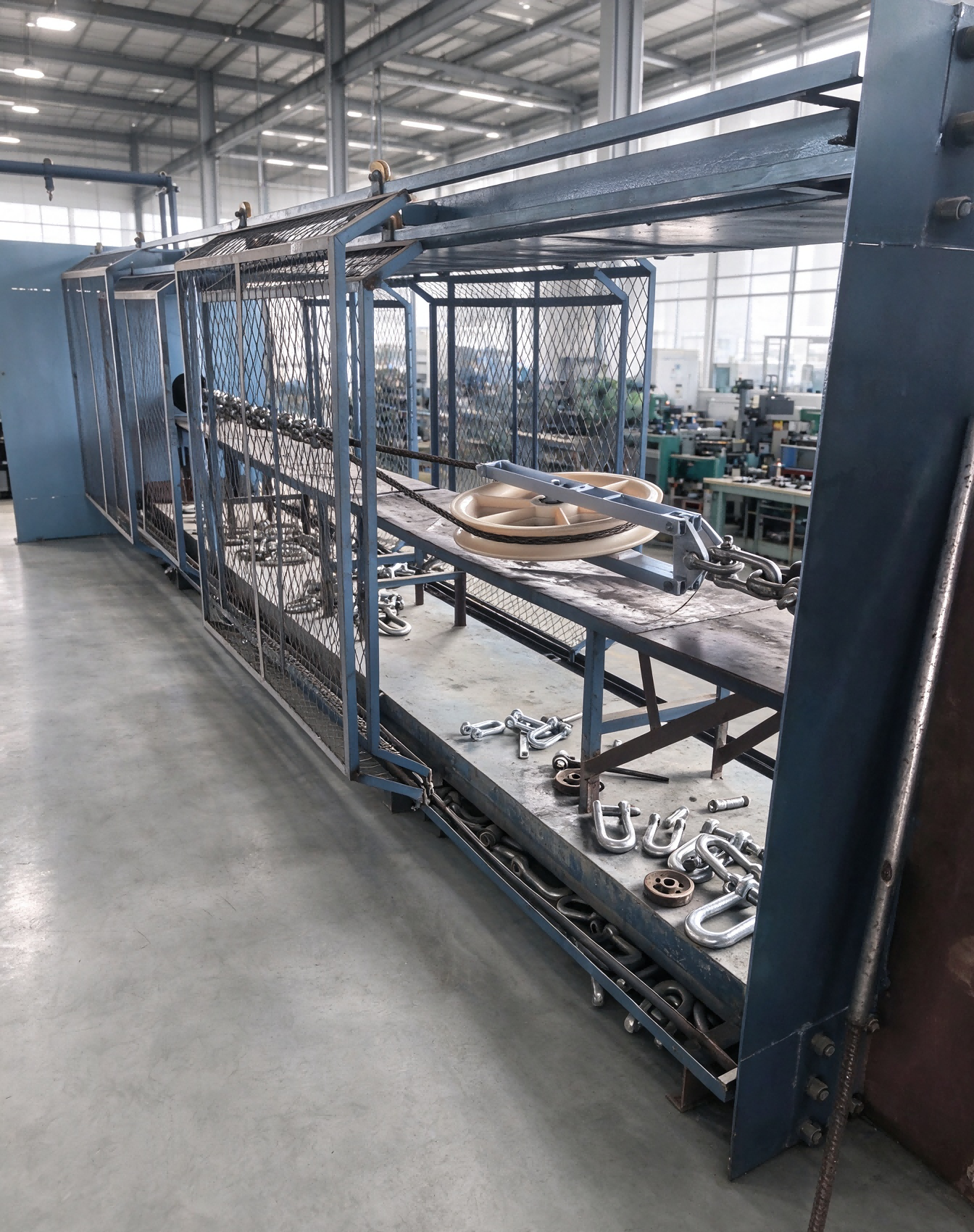
All REACH POWER stringing blocks undergo strict load testing. Their breaking strength exceeds national standards, and test reports are available upon request for project inspection and acceptance.
Frequently Asked Questions
Q1: Can I use a stringing block with 10 ton rated working load for a 12 ton temporary load that only lasts for 10 minutes?
A1: No, this practice is not recommended, even for very short load durations. Temporary peak loads that exceed the rated working load of the unit can create hidden internal micro-deformations on the sheave, pivot shaft, or frame that are not visible during a quick visual check, and will greatly reduce the remaining service life and safety margin of the equipment for future use. All stringing operations should be planned to keep the maximum dynamic load below the verified actual usable working load of the stringing block for the full duration of the work.
Q2: How often should I re-verify the working load of stringing blocks that are stored in the warehouse and not in active use?
A2: For equipment stored in a dry, covered warehouse environment with regular anti-rust maintenance, full working load verification should be conducted at least once every 2 years. For equipment stored in open air, or exposed to coastal high salt spray environments, verification should be conducted at least once per year, to account for hidden corrosion that may develop on internal components that are not visible during routine checks.
Q3: For export to Saudi Arabia, what compliance documents are required for stringing blocks?
A3: As regulated power construction equipment, stringing blocks shipped to Saudi Arabia must obtain PCoC (Product Compliance Certificate) and SCoC (Shipment Compliance Certificate) via the SABER system. No SASO certificate is required for this category of products, and all shipments must follow this documented compliance process to clear customs smoothly.
Q4: Does the type of wire rope used affect the actual usable working load of the stringing block?
A4: Yes, you should confirm that the stringing block sheave groove is designed to match the diameter and type of wire rope you are using. Using a wire rope with a much smaller diameter than the designed groove size will lead to uneven load distribution, which effectively reduces the actual maximum load the unit can safely support, even if the nominal load of the wire rope is well below the rated stringing block working load.
Conclusion
The core takeaway from this full guide is that teams cannot rely only on the original rated working load marked on the nameplate of a new stringing block to judge the safe operating limit of an in-service unit pulled from project inventory. By understanding the official industry definition of stringing block working load, mastering the conversion logic between working load, minimum breaking tension and mandatory safety factor, completing the 10-minute on-site verification process for each unit before deployment, and applying the quantified load degradation rules for aged and worn equipment, construction crews can greatly reduce the risk of unexpected overload failure during overhead line stringing operations.
Ningbo Reach Electric Power Equipments, as a professional manufacturer and exporter with over 20 years of experience in power line, substation and electrical construction and maintenance equipment, delivers integrated solutions covering T&D, manufacturing, sales and technical support for global power engineering clients. The full product portfolio includes pullers & tensioners, stringing blocks, motorized winches, anti-twist steel wire ropes, cable rollers, hydraulic crimping tools, cable cutters, conductor grips, live-line working tools and power safety devices.
Beyond supplying power construction tools, the team delivers practical engineering guidance for overhead line construction, ranging from customized technical proposals to efficient project delivery, following the core principle of rationalization and high efficiency. The company supports OEM and ODM services for clients across all global markets, and the professional technical team can provide targeted consultation for load verification, equipment selection, and project-specific stringing operation guidance upon request.
Just let us know the conductor size required for your project, and our technical team will recommend the suitable model.

没有评论:
发表评论